
Case Study · Crisis & Emergency Response
Smitty's Supply
Fire Response
Communications & AV Lead · October 14–27, 2025
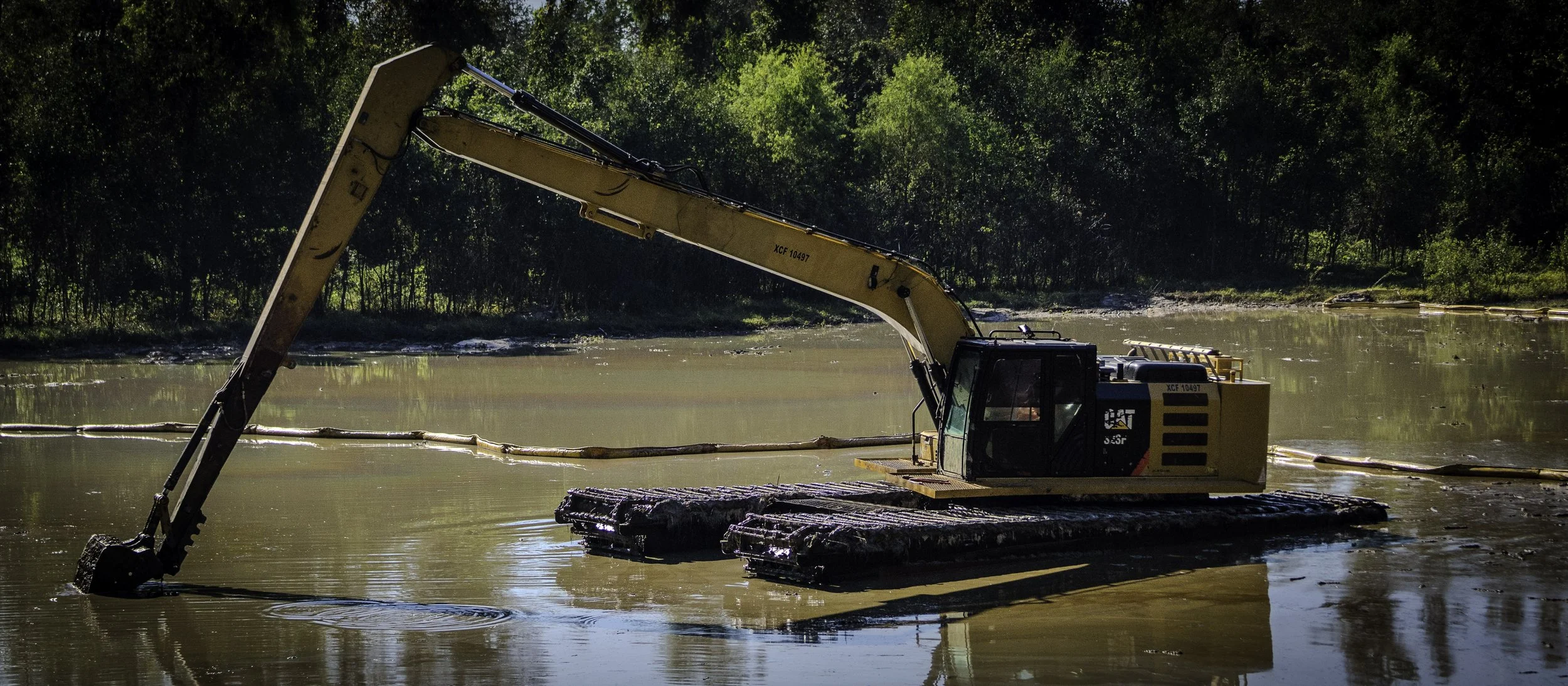
An industrial explosion. Ponds, ditches, and a river under recovery.
On Aug. 22, 2025, an explosion and fire at the Smitty's Supply petroleum products plant in Roseland, Louisiana, released oily petrochemicals across the surrounding area, saturating adjacent ponds and drainage ditches and sending contaminants nearly 40 miles down the Tangipahoa River toward Lake Pontchartrain. The fire burned for more than two weeks. EPA mobilized immediately and led the response in unified command with the Louisiana Department of Environmental Quality, Tangipahoa Parish Government, Louisiana State Police, and the Town of Roseland.
The recovery's central challenge was the ponds. Adjacent bodies of water, heavily saturated with petroleum products, required sustained remediation over weeks. The river was also affected and extensively worked, but the ponds were where the most concentrated operations took place, and where much of the communications work needed to be anchored.
I arrived on Oct. 14, nearly eight weeks into the response, as cleanup operations entered their final phase and EPA prepared to transition site control back to Smitty's Supply. Over fourteen days, I produced six original pieces spanning three formats that include documentary, PSA, and non-narrative ENG, each developed in coordination with Tangipahoa Parish leadership to align messaging with local officials at a critical moment in the response's close-out.
The Authoritative Overview
The public information officer took the first draft of the script and provided light notes. I was originally going to voice the script, but EPA Region 6 Administrator Scott Mason lent an authoritative voice that provided institutional weight.
Producing a narrated documentary during an active response, with a regional administrator as narrator, required locking approved language early, aligning with leadership on messaging before any recording, and building an edit structure flexible enough to accommodate a mission that was still unfolding while the piece was being made.
EPA Region 6 Administrator Scott Mason narrates an overview of the agency's emergency response to the Smitty's Supply fire and hazardous materials release on the Tangipahoa River.
Pond D2 Recovery
The Pond D2 remediation was one of the most visible and technically complex elements of the response. A contained water body affected by hazmat runoff, requiring careful recovery work and clear public communication about what was happening and when it would be resolved. The PSA format gave that story a shareable, community-facing structure: direct, specific, and built for distribution through local channels and parish networks.
A public-facing PSA covering EPA's Pond D2 recovery operations, produced in coordination with Tangipahoa Parish leadership for distribution across community and federal channels.
Pond D2 — The Work Behind It
While the PSA gave communities what they needed to know, the non-narrative ENG provided the technical reality behind it. This companion piece goes deeper into the actual environmental remediation at Pond D2. The equipment, the methodology, and the people doing the work. It's built for audiences who want to understand, not just be reassured.
A non-narrative ENG package providing deeper technical context on the Pond D2 recovery effort — the environmental remediation methodology behind EPA's operations at the Smitty's Supply site.
Frac Tank Movements
By mid-October, frac tanks moving through Roseland carried a specific meaning: contaminated material recovered from the ponds and surrounding area was being collected and transported out. For a community that had watched heavy equipment arrive and depart for weeks without much explanation, the movement of tanks could be read as progress or as cause for alarm, depending on whether anyone told them what they were seeing.
This PSA does that work. It explains what the tanks are, what they're carrying, and what their movement signals about the status of the cleanup.
A community-facing PSA explaining frac tank operations to residents observing heavy equipment movement during the active response — what the tanks are, why they're moving, and what it signals about the cleanup's progress.
The Community Involvement Presence
EPA Community Involvement Coordinators are the agency's human interface. They’re the people knocking on doors, holding listening sessions, and making sure affected residents have direct access to accurate information and the right contacts inside the response structure. In an unfamiliar jurisdiction, that function becomes more important, not less: CICs serve the agency's credibility in communities that haven't worked with EPA before.
This non-narrative ENG follows CIC work in the Tangipahoa area and includes the conversations, community touchpoints, and relationship-building that run alongside the technical response and often outlast it.
A non-narrative ENG package documenting Community Involvement Coordinator work during the Smitty's response — the community engagement running alongside and beyond the technical cleanup.
Continued Partnership & Oversight
The final piece documents the response's endpoint: EPA transitioning site control back to Smitty's Supply as the agency's active cleanup role concluded. Getting communities to that milestone is the whole mission, and communicating it clearly matters as much as communicating the crisis that preceded it. This piece shows what the close-out looks like and what EPA's continued oversight and partnership commitment means in practice after the response teams have stood down.
It also reflects how the communications work was built throughout the deployment: in direct coordination with the state and parish leadership.
A non-narrative ENG package documenting EPA's continued partnership with Tangipahoa Parish and ongoing oversight commitments following the active response phase.
Coordination before the camera goes up
Every piece produced during the Smitty's deployment was developed in coordination with partner agencies, particularly Tangipahoa Parish leadership, to ensure messaging alignment before distribution. A production built in isolation, without alignment from the local officials and partners who hold established community trust, risks complicating a response rather than supporting it.
The six pieces in this case study reflect a workflow where sign-off moved through the right channels at the right time, keeping parish leadership informed and invested throughout. The practical result was content that could travel through local distribution channels alongside federal ones, with credibility on both ends.