
Case Study · Crisis & Emergency Response
Moss Landing
Battery Fire Response
PSA Series Producer · Moss Landing Recovery · February – March 2026
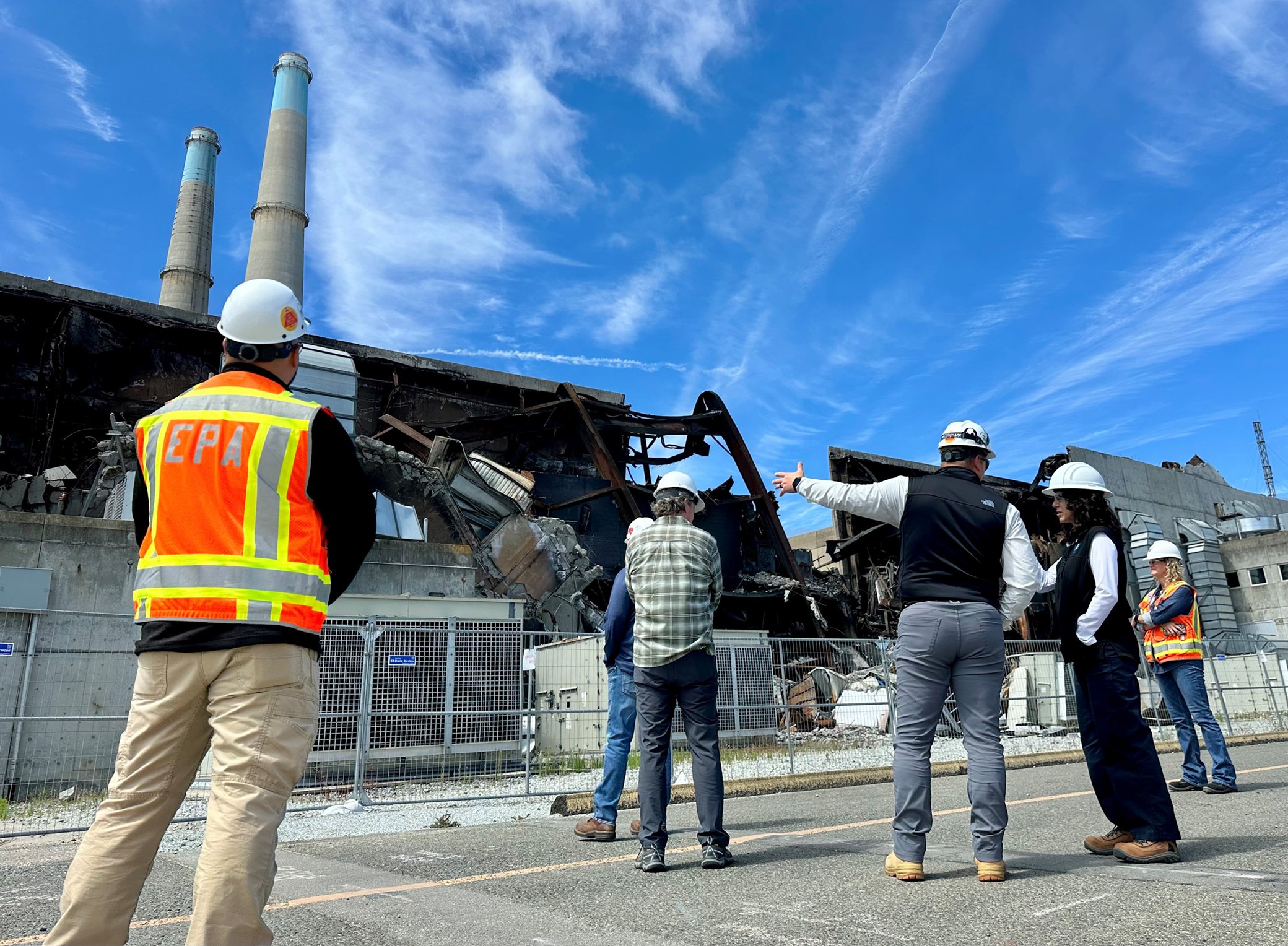
The world's largest battery facility and its most dangerous cleanup
On Jan. 16, 2025, a fire broke out at Vistra Corporation's Moss Landing Energy Storage Facility in Monterey County, California. The largest battery energy storage system (BESS) in the world at the time of its 2020 opening, holding approximately 100,000 lithium-ion battery modules with a total capacity of 3 gigawatt-hours. The fire burned for two days, and approximately 1,500 nearby residents were evacuated.
The Moss Landing 300 building, a repurposed historic turbine hall housing rows of batteries, was largely destroyed. Approximately 55% of modules were damaged. A significant flare-up followed on Feb. 18.
The U.S. Environmental Protection Agency deployed personnel the night the fire broke out and remained continuously involved. In July 2025, the EPA reached an administrative settlement with Vistra, requiring the company to fund and carry out battery removal under federal oversight. It would be the largest lithium-ion battery cleanup in the agency's history. Removal operations formally began on Sept. 29.
A structurally compromised building full of batteries that can reignite.
Lithium-ion battery fires can produce hydrogen fluoride and other toxic, flammable gases · Damaged modules pose ongoing thermal runaway risk · The Moss 300 building required partial demolition and structural reinforcement before entry was safeCalled in by the coordinators who were already in the field
My engagement at Moss Landing came in late summer 2025, months into the response. EPA's Community Involvement Coordinators, already embedded in the Moss Landing community and deeply involved in the agency's outreach work, reached out directly.
What they needed were communications products that could meet a community with legitimate fears where they were. Residents weren't just worried about the building. They were worried about what moved into Elkhorn Slough, nearby rivers, and the ocean, and what settled onto crops and livestock as far inland as Salinas.
The CICs developed the first drafts of the script. My job was to help them get those drafts broadcast-ready by making the language more conversational, less technical, and written for how people actually speak on camera rather than how they write in reports.
"What we write doesn't always read well for the camera. Getting a script into someone's voice so it sounds like them, not like a document, is half the production."
The First Question Everyone Was Asking
Before any battery moves, the question the community and the workers needed answered was the most fundamental one: Is this safe? The first PSA in the series addresses personnel and community safety protocols for the Moss Landing battery removal, outlining the protections in place and what residents and workers can expect. Clear, direct, and designed to meet people where their anxiety was highest.
Moss Landing Recovery, Part 1: Personnel & Community Safety. Produced for EPA Region 9 Community Involvement Coordinators.
Explaining an Unprecedented Process
Moving damaged lithium-ion batteries out of a compromised structure, treating them for safe transport, then routing them to approved recycling facilities is not a process the public had a frame of reference for. This PSA breaks down what battery transport and disposal looks like under EPA oversight, how the batteries are treated before they leave the site, how they travel, and where they go.
Moss Landing Recovery, Part 2: Battery Transport & Disposal. Produced for EPA Region 9 Community Involvement Coordinators.
Inside the Fence Line
The final PSA in the series goes to the most technical subject: how damaged lithium-ion batteries are physically handled during removal operations. Workers at the Moss Landing 300 site face conditions without a reliable precedent, an unstable structure, modules that can enter thermal runaway without warning, and a constant risk of toxic gas exposure. This piece addresses battery-handling protocols and provides the community with visibility into the rigor of the process.
Moss Landing Recovery, Part 3: Battery Handling. Produced for EPA Region 9 Community Involvement Coordinators.
A Shoot Delayed by the Government Shutdown
The initial timeline stretched longer than planned. A government shutdown in fall 2025 paused the project. While the government was shut down, I deployed in support of the Smitty’s Supply fire response. After two weeks deployed, the government was still shuttered, but I was not furloughed. Planners for the Moss Landing video were, however. Once the government reopened on Nov. 13, planning resumed with the shoot pushed to Jan. due to scheduling conflicts and the holidays.
In early 2026, shooting commenced, and we built around three initial locations, but due to time constraints, we shifted to two and changed the angles. Two scripts were held back from review, and we edited copy on the fly so the subject matter experts could deliver lines conversationally. Through the noise of the environment and incoming rain, we managed to get the shoot done down to the wire.
The resulting three PSAs were delivered to the program for their own dissemination in addition to our own social media shares.
More from Moss Landing
A companion feature is in development: a profile of EPA On-Scene Coordinator Kazami Brockman and what leading a response of this scale — the largest lithium-ion battery cleanup in EPA history — actually demands of the people responsible for it.
Feature story — in development