
EPA Region 9 · Feature Story
Undamming the Klamath: Toxic blooms and a river reborn
SAN FRANCISCO — From the early 1900s to the 1960s, California and Oregon Power Co. (Copco), now known as PacifiCorp, built a series of four dams along the Klamath River to generate hydroelectric power for thousands of residents. Following decades of ecological impacts, including to native salmonid fisheries and water quality, the last of these dams was removed in 2024.
In the early 2000s, anecdotal reports of harmful algal blooms, or HABs, led the U.S. Environmental Protection Agency to support water quality testing that confirmed the presence of microcystins, a toxin produced by certain types of algae known as cyanobacteria, or blue-green algae, commonly found in warmer, slow-moving or stagnant water.
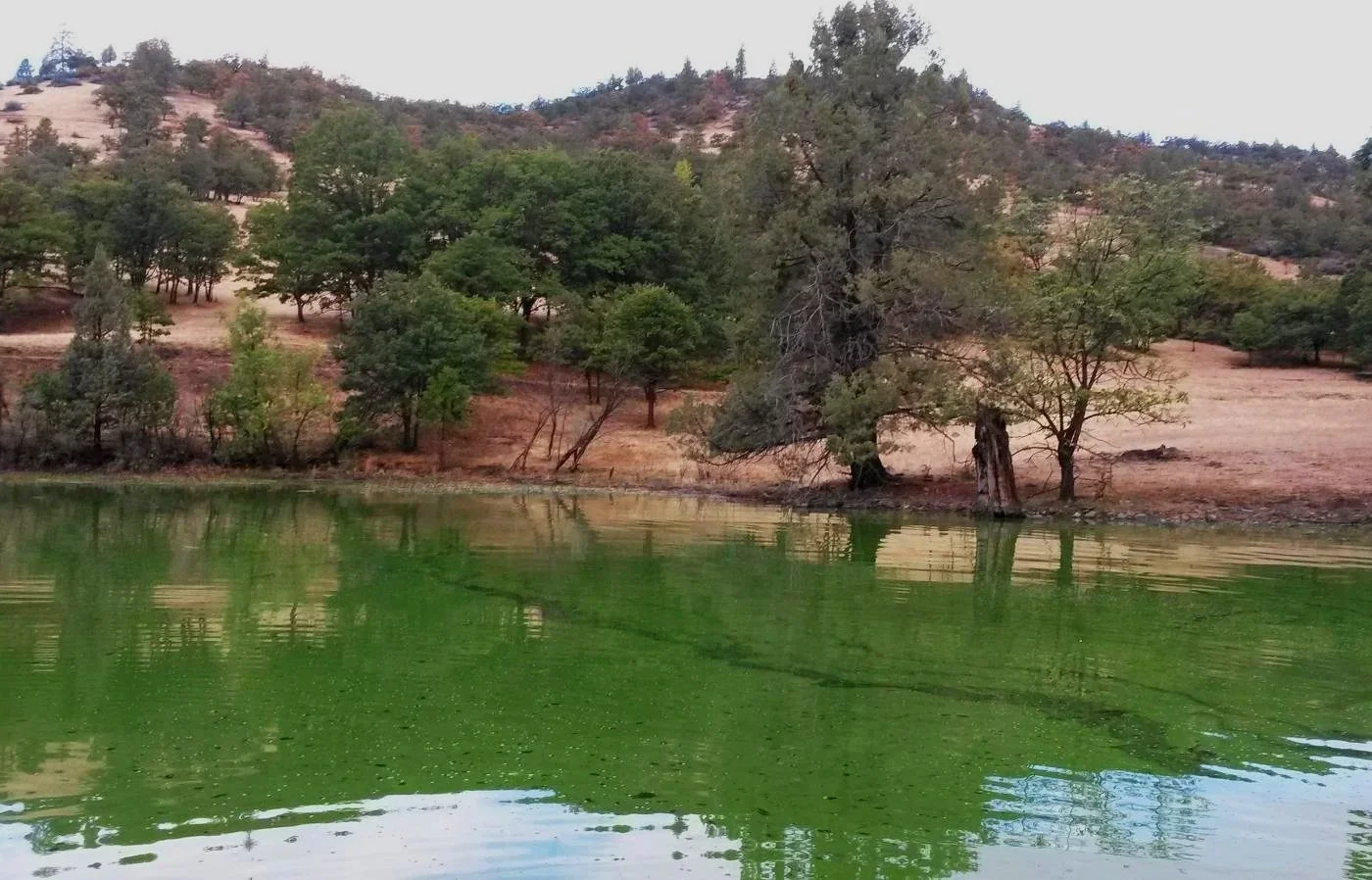
Harmful algal blooms in the Klamath River in Southern Oregon, 2015. Photo: University of Oregon
"Prior to the removal of the dams, we observed significant ecological challenges," said Phoebe Song, interim HAB coordinator in EPA Region 9's Water Division. "These included the proliferation of harmful algal blooms, the decline of critical fish and troubled water quality."
People and wildlife that interact with the Klamath River are exposed to the dangers of algal blooms, which can cause rashes, vomiting and liver or nerve damage. Algal blooms have also disrupted the activities of the Karuk and Yurok tribes, who fish and conduct ceremonies in the river. HABs have caused fish kills and blocked access to clean spawning grounds, reducing salmon populations that are important to the tribes.
Laboratory Services and Applied Sciences Division chemist Cynthia Holman analyzes samples provided by the Water Division as part of the collaboration on Klamath River restoration. "All of the requests come through their coordinator," Holman said. "Once we receive the samples, we process them and send the result to their designated list." The list includes local, state and tribal partners.
"During routine monitoring, increased greenness in a sample generally correlated with greater cyanobacterial biomass and, consequently, higher microcystin concentrations," Holman said. "We also observed periods when samples were optically clear yet contained substantial dissolved microcystin. The most likely explanation is widespread cyanobacterial cell lysis, which releases intracellular toxins into the water column — creating the misleading impression of safe conditions despite significant toxicity."
The Hoopa Valley, Klamath, Karuk and Yurok tribes, together with California and Oregon, formed the Klamath River Renewal Corp. to fund the dam removals. In addition to water quality testing, EPA has played a role in habitat restoration and environmental management throughout the project. This is part of EPA's ongoing, cross-divisional work to improve conditions in the Klamath Basin through technical assistance and funding and by granting authority to all four Klamath Basin tribes to set their own water quality standards.
Work by the Klamath Tribal Water Quality Consortium, with assistance from EPA, documented that microcystins originating in the former reservoirs contaminated the river downstream. "These reservoir-borne HABs posed a threat to human health, altered ecosystem processes, and impacted tribal members experiencing the greatest impact due to their intimate interactions with the environment," according to a statement from the tribes of the Klamath River.
In 2020, PacifiCorp agreed to remove the Klamath River dams, and demolition began in 2023. The removal of Copco 1, Copco 2, JC Boyle and Iron Gate dams concluded in late 2024, restoring natural flows to more than 400 miles of river and tributaries.
"One of the biggest hopes was to restore the historic spawning grounds in the upper Klamath River basin for chinook and coho salmon," Song said. "Everyone was thrilled to see the immediate return of threatened coho salmon in Klamath, nearly 100 years after the dams were established."
Through consistent involvement and collaboration between the Laboratory Services and Applied Sciences Division and the Water Division, EPA is providing sound science to help tribes achieve their long-standing goal of restoring the Klamath River.
"It's definitely changed drastically along the Klamath," Holman said. "The river is coming back and we're finally seeing the results of that recovery."