
EPA Region 9 · Feature Story
Protecting human health and the environment at our ports
LOS ANGELES — Every day, workers at the Ports of Long Beach and Los Angeles, the highest-volume ports in America, move approximately 50,000 containers, translating to about $1.2 billion of goods movement that supports retailers, construction, the automotive industry and other sectors of the economy. Among those containers — and those at multiple ports across Region 9 — are products like pesticides, engines, appliances and vehicle emission defeat devices that can potentially pollute the communities where they end up.
Enter U.S. Environmental Protection Agency inspectors, working with Customs and Border Protection to ensure cargo offloaded daily complies with U.S. laws including the Clean Air Act and the Federal Insecticide, Fungicide and Rodenticide Act.
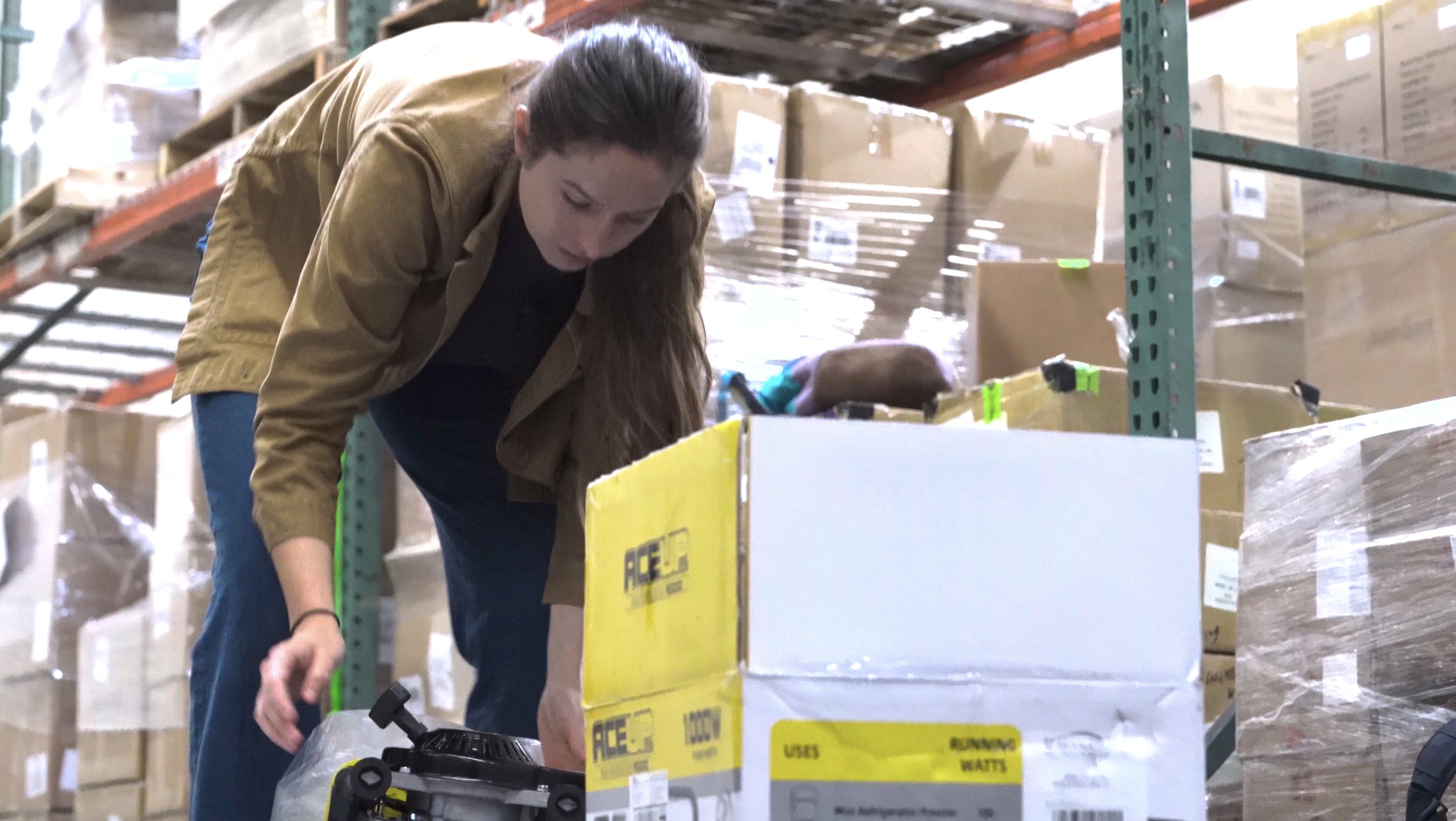
Erika Pauley, an inspector with EPA Region 9's Enforcement and Compliance Assurance Division, inspects a leaf blower at a Customs Examination Station in Carson, Calif., June 1, 2023. (Photo by Edward Coffey)
"I ensure engines, vehicles and refrigerants coming into the country are conforming to the Clean Air Act," said Gem Guzman, a life scientist and enforcement inspector with EPA Region 9's Enforcement and Compliance Assurance Division. "I look to see that the engines are certified or that the refrigerants are coming from approved sources."
Erika Pauley, another enforcement inspector with the division, focuses on imports into the Ports of Long Beach and Los Angeles and imports along the southern border, where she works closely with Customs and Border Protection.
"I have always been very focused on the environment and what it means to people," Pauley said. "I feel like I can be part of the solution, ensure that everyone's in compliance so that way we can all equally enjoy clean air together."
Both Pauley and Guzman are part of a small, dedicated team of Clean Air Act and pesticide law inspectors in EPA's Southern California Field Office. The team's work typically originates from referrals by Customs and Border Protection, a key federal partner in preventing illegal products from entering the country. Whenever products of concern are identified, the agency sends referrals to EPA to determine whether those imports comply with the Clean Air Act, the Federal Insecticide, Fungicide and Rodenticide Act and the American Innovation and Manufacturing Act.
"They are inspecting engines that would come into the United States to determine if they are heavy polluters of nitrous oxides, nitrogen oxides, sulfur or carbon monoxide," Pauley said.
When Guzman or Pauley inspect engines in a shipment, they look for vehicle emission control information indicating the engine is EPA-certified. They also check whether labels are fraudulent.
"Most of the time, unfortunately, the engines don't have the vehicle emission control information sticker," Guzman said. "That means they are not certified at the time they're declared. Then I reach out to the broker or importer and request supporting documentation."
If no documentation is provided, inspectors seize the items and give Customs and Border Protection a recommendation for denial. Pesticides, appliances and defeat devices undergo the same scrutiny.
Guzman will contact offenders to allow them to address issues with their imports. "A lot of them are foreign importers. A lot of them are shell companies, unfortunately," Guzman said. "Once we have confirmation from the importer, we often issue a civil penalty, and once they pay that penalty, we close the case."
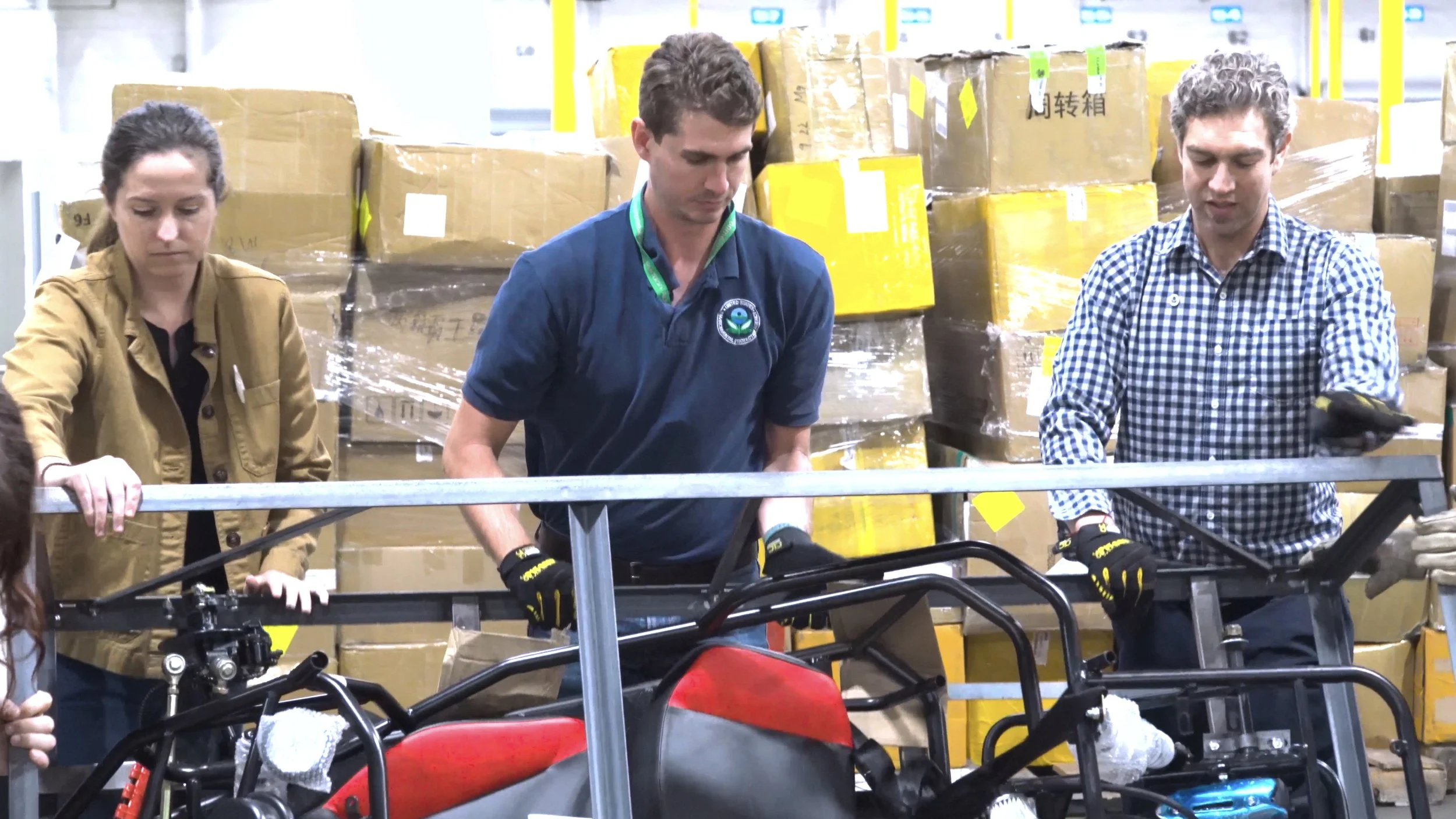
Pauley, Scott Connolly (center) and Daniel Haskell inspect a go-kart at a Customs Examination Station in Carson, Calif., June 1, 2023. (Photo by Edward Coffey)
Determining the background of an importer often involves business research by Region 9 Environmental Information Center librarians. "We look into as many factors as we can possibly find to determine the size of the violator," Pauley said. "If this is a first-time violator, if this is someone who's violated before — we take all those factors into consideration in our formal enforcement actions."
Formal enforcement actions are conducted in close coordination with the Region 9 Office of Regional Counsel and can result in penalties. In cases involving illegal engines, penalties can include the statutory maximum per engine. The division's work at these ports has resulted in the seizure of tens of thousands of illegal engines and chemicals and fines totaling millions of dollars.
Past interventions have led to enforcement actions including a $1.6 million settlement with Sinister Diesel for aftermarket emission defeat devices; more than $530,000 in civil penalties to multiple offenders for thousands of illegal small engines intended for ATVs, motorcycles, generators and lawn equipment; and the intercept of unregistered disinfectants at the Port of Los Angeles falsely claiming to protect against viruses, including COVID-19.
Region 9 inspectors are on the front lines in the fight against illegal imports. Working with Customs and Border Protection, enforcement and compliance assurance prevents illegal products from entering the country while protecting communities, preserving environmental standards and ensuring companies that play by the rules are not undercut by those that don't.